

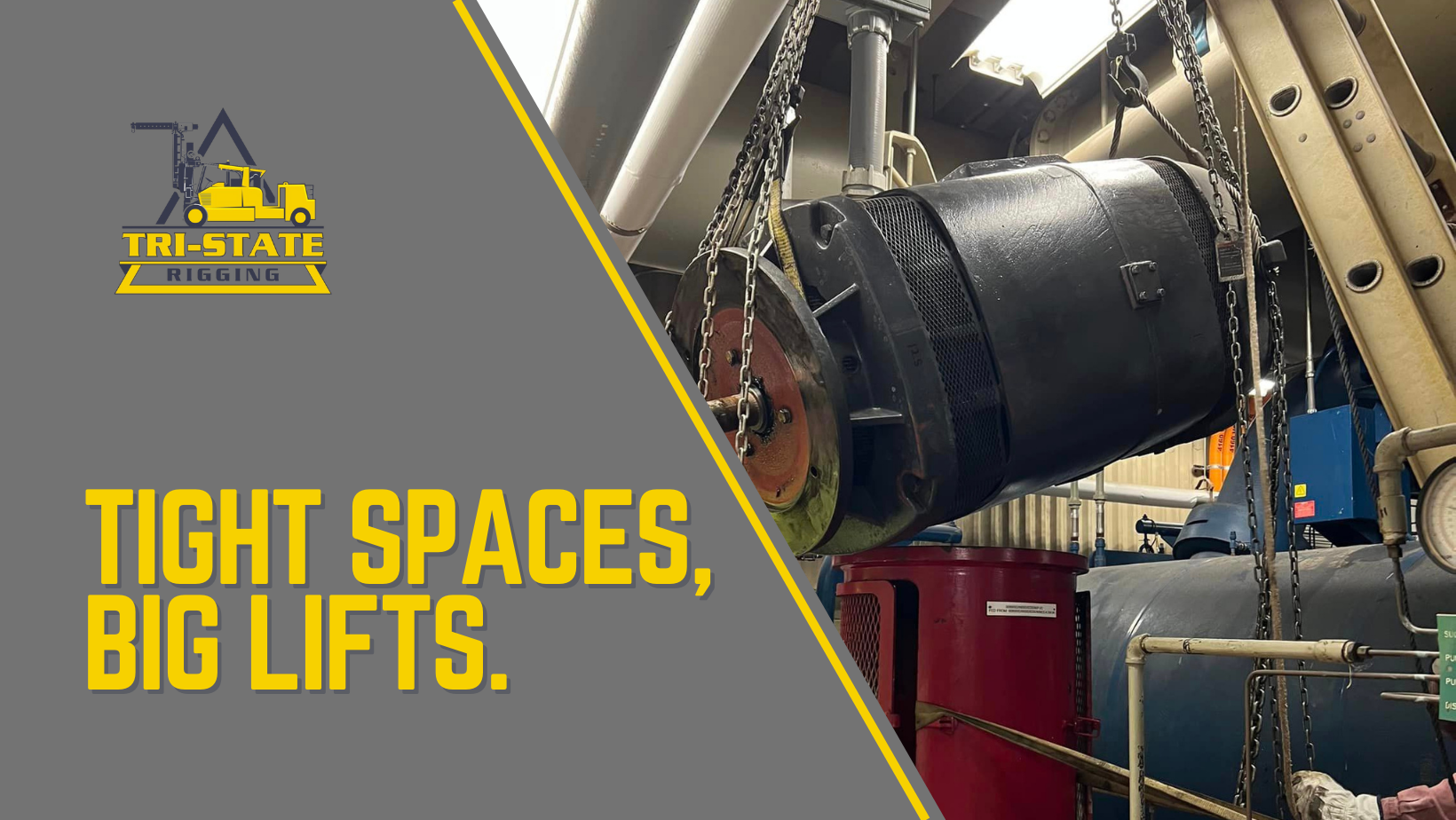
Lifting heavy equipment in a cramped space is never simple. At Tri-State Rigging, our crews tackle jobs where every inch counts and every move has to be calculated. Tight-site lifts come with unique challenges that can slow a project down if they’re not addressed properly, but with experience and the right equipment, these jobs get done safely and efficiently.
One of the biggest hurdles is simply getting to the load. Narrow roadways, small entrances, and obstacles like power lines or nearby buildings all require careful planning. Sometimes, the crane or lift has to be staged in a very precise spot just to make the pick. Without proper positioning, even a small lift can become a major headache.
Tight vertical and horizontal spaces add another layer of difficulty. Low ceilings, overhead piping, or adjacent structures can limit crane boom angles and movement. Our crews have to calculate every swing, every drop, and sometimes work in increments to safely place the load.
Many tight sites also come with uneven ground, soft surfaces, or weight limits that affect crane setup. Choosing the right crane, gantry system, or powered skate system isn’t just about lift capacity—it’s about making sure the load can move safely without damaging the site or surrounding structures.
Tight-site lifts often happen alongside other trades, like electricians, plumbers, or general contractors. Coordinating timing, space, and communication is critical. A misstep on one side of the job can halt the lift entirely, so planning and teamwork are key.
Experience, planning, and the right gear make tight-site lifts possible. At Tri-State Rigging, we evaluate the site, select equipment that fits the space, and use crews trained in NCCCO-certified rigging techniques. From gantries and spider cranes to forklifts and jack-and-slide systems, we tailor the approach to the job—not the other way around.
Every tight lift is different, but the goal is the same: get the load from point A to point B safely, efficiently, and without unnecessary delays.
.avif)

.avif)

Tri-State Rigging supports critical projects across a wide range of industries:
.svg)

